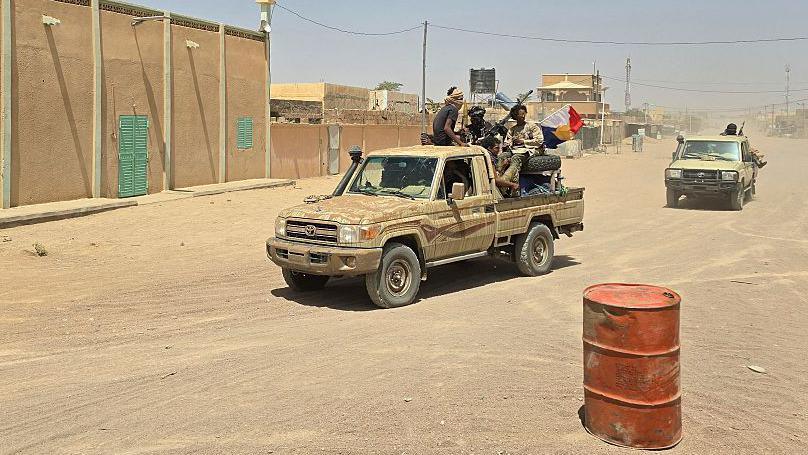
Mali’s northern stronghold of Kidal has once again become a flashpoint in the Sahel’s unraveling security landscape. In a move that signals both tactical recalibration and strategic vulnerability, Russia’s Africa Corps has confirmed its withdrawal from the region—amid escalating attacks, fractured alliances, and growing questions about Moscow’s long-term footprint in West Africa.
This isn’t a retreat masked as repositioning. It’s a response to an environment where control is fleeting, resistance is intensifying, and local populations are increasingly resistant to foreign military presence—regardless of the flag.
The confirmation, delivered through Russian military sources with ties to the Africa Corps, marks a pivotal moment. For nearly three years, Malian forces backed by Russian paramilitary operatives have maintained a tenuous grip on Kidal—a region historically resistant to central authority. But recent surges in jihadist offensives and ethnic militia activity have made continued occupation untenable.
Why Kidal Matters in Mali’s Conflict
Kidal is more than a geographic location. It’s a symbolic nexus of rebellion, autonomy, and resistance. Located in northeastern Mali, the region has long been a stronghold for Tuareg separatist movements. Its desert terrain, porous borders, and sparse infrastructure make it difficult to govern—and ideal for insurgent operations.
When Malian forces, supported by Russian operatives, retook Kidal in 2021, it was framed as a victory against terrorism and a step toward national unity. But control was always more nominal than real. Local administrations operated under duress. Supply lines were routinely ambushed. And the population—largely skeptical of both Bamako and its foreign allies—remained alienated.
Now, the withdrawal of Russian-backed forces suggests a concession: holding Kidal isn’t worth the cost.
Recent attacks on military convoys, supply depots, and checkpoints have intensified since early 2024. In March alone, at least five major assaults targeted Malian army positions near Kidal, two of which involved coordinated drone strikes—an emerging tactic in the region’s evolving warfare.
One such attack, reportedly carried out by the National Movement for the Liberation of Azawad (MNLA) in alliance with elements of Jama’at Nusrat al-Islam wal-Muslimin (JNIM), destroyed a fuel convoy and killed over a dozen soldiers. It was the final straw.
Russia’s Africa Corps: A Strategic Pullback?
Russia’s Africa Corps, widely seen as the successor to the Wagner Group after Yevgeny Prigozhin’s death, has maintained a low profile since its formation. But its operations in Mali, the Central African Republic, and Sudan have followed a similar pattern: rapid deployment, heavy-handed tactics, and eventual overextension.
The withdrawal from Kidal isn’t an isolated event. It’s part of a broader reassessment.
Following sanctions, leadership fractures, and reputational damage from battlefield losses, the Africa Corps is shifting from direct combat roles to advisory and training functions. In Kidal, this means pulling out frontline units while maintaining a limited intelligence and logistics presence in nearby Gao and Timbuktu.
Sources within Malian security forces confirm that Russian operatives are no longer embedded in forward positions. Instead, they’re consolidating in urban centers, where supply chains are more secure and extraction routes remain viable.
This isn’t just about risk mitigation. It’s about resource allocation. With Ukraine consuming much of Russia’s military focus and other African operations under strain, Mali—once a cornerstone of Moscow’s Sahel strategy—now looks increasingly like a liability.
The Security Vacuum Left Behind
With Russian forces stepping back, the question isn’t whether Kidal will fall—it’s who will fill the void.
The Malian army, despite years of Russian training and equipment, lacks the capacity to independently secure the region. Its troops are overstretched, under-equipped, and often targeted by IEDs and ambushes. Morale remains low, especially among conscripts forced into deployments in hostile territories.

Local militias, both pro-government and separatist, are stepping in. The Platform coalition, aligned with Bamako, has moved units toward the region’s southern flank. But their presence risks reigniting old conflicts with the CSP (Strategic Framework for the Defense of the People of Azawad), a coalition of Tuareg-led groups that opposes central control.
Meanwhile, jihadist networks are capitalizing on the chaos. JNIM and the Islamic State in the Greater Sahara (ISGS) have increased patrols and recruitment drives in rural areas once patrolled by Russian-Malian joint forces.
A security official in Gao, speaking on condition of anonymity, put it bluntly: > “Every time we pull out, the terrorists come back within 72 hours. It’s not a question of if, but when Kidal becomes a free zone again.”
This cycle—offensive, occupation, withdrawal, resurgence—has repeated for over a decade. The difference now is that the external muscle that once enforced temporary stability is retreating.
What the Withdrawal Means for Mali’s Military Regime
The current Malian junta, led by Colonel Assimi Goïta, has staked its legitimacy on restoring national sovereignty and defeating terrorism. Its alignment with Russia was sold as a break from France’s “neo-colonial” influence and a path to self-reliance.
But the Kidal withdrawal undermines that narrative.
Goïta’s government faces rising domestic criticism. In urban centers like Bamako and Sikasso, frustration is growing over conscription, economic decline, and the lack of tangible security gains. Protests, though suppressed, are becoming more frequent.
Internationally, the pullout raises doubts about the junta’s ability to deliver stability. The African Union and ECOWAS had already suspended Mali following its coups. Now, even its closest allies are watching closely.
Russia, too, risks reputational damage. If Kidal collapses into full-scale insurgency or separatist control, it will be seen as a failure of the Russia-Mali security model—one that other African states may hesitate to replicate.
Regional Fallout and the Sahel’s Deepening Crisis
The implications extend far beyond Mali’s borders.
The Sahel is a interconnected theater. Instability in Kidal ripples into Niger, Algeria, and even Mauritania. Migrant routes, smuggling corridors, and extremist networks operate across invisible borders. A power vacuum in northeastern Mali could accelerate regional destabilization.
Niger, now under its own military rule and expelled from Western alliances, is already grappling with spillover violence. In early 2024, attacks near its Malian border surged by 40% compared to the previous quarter. With Russian forces pulling back from Kidal, that pressure is likely to increase.
Algeria, which has long opposed foreign military adventurism in the Sahel, may push for renewed diplomatic efforts. But its influence is limited, and past peace accords—like the 2015 Algiers Agreement—have failed to hold.
Meanwhile, the United Nations mission in Mali (MINUSMA) officially ended in 2023, leaving no neutral peacekeeping force on the ground. The African Union lacks the resources for large-scale intervention. And Western nations, burned by past failures, remain reluctant to re-engage.
The result? A self-reinforcing cycle: less security → more extremism → less governance → more chaos.
Limitations of Foreign Military Partnerships in the Sahel
The Kidal withdrawal underscores a broader truth: foreign military partnerships rarely address root causes of conflict.
Russia’s model in Mali relied on firepower, fear, and short-term gains. It delivered tactical victories—checkpoints secured, convoys protected, enemies killed—but failed to build sustainable institutions, reconcile communities, or create economic alternatives.
Compare this to community-based policing models used in northern Nigeria, where local vigilance groups, supported by federal training and intelligence, have reduced Boko Haram attacks in some areas. The difference isn’t firepower—it’s legitimacy.
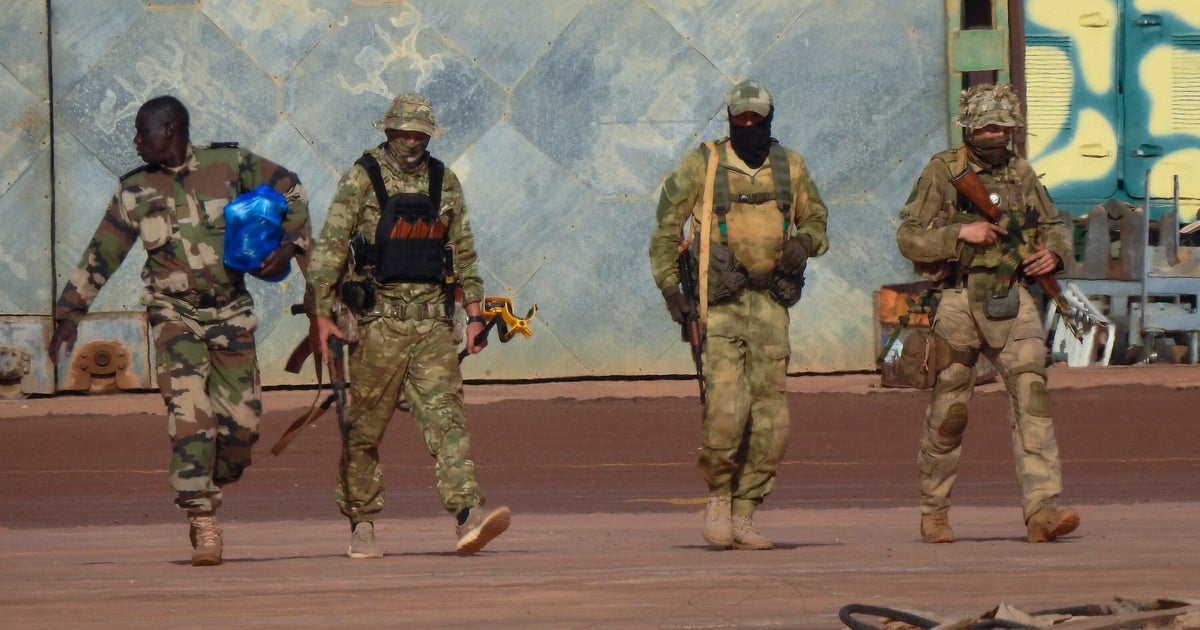
In Kidal, Russian forces were seen as occupiers, not protectors. Their aggressive tactics—documented by Human Rights Watch and the UN—alienated civilians and fueled resentment. When attacks occurred, locals often refused to cooperate with investigations.
Even when foreign forces leave, the damage lingers.
A humanitarian worker in Gao noted: > “People don’t trust the army. They don’t trust the Russians. And now that both are pulling back, they’re afraid no one will come when the next attack happens. That’s the real crisis—loss of faith in protection.”
What’s Next for Mali’s Security Strategy?
The Malian military government has two paths forward—neither easy.
The first is to double down on military action. This could mean deeper reliance on Russia for air support, drone operations, or intelligence sharing. It might also involve mobilizing more conscripts and launching offensives into northern strongholds.
But history suggests this won’t work. The Malian army has launched dozens of operations with similar aims. None have produced lasting peace.
The second path is political engagement. This means reopening negotiations with Tuareg-led groups, addressing grievances over autonomy and resource distribution, and pursuing inclusive governance. It also means resisting the temptation to frame every opponent as a terrorist.
Some signs point to a shift. In late 2023, Malian officials held backchannel talks with CSP representatives in Algiers. No breakthroughs were announced, but the mere act of dialogue signals flexibility.
Still, without trust, diplomacy is fragile. And without security, no agreement will hold.
A Closing Reality: Control Is Temporary, Influence Is Long-Term
Russia’s Africa Corps may have left Kidal, but the conflict is far from over.
The withdrawal is not a defeat, nor is it a victory. It’s a recalibration in a war where control is fleeting and influence is earned slowly. The real test isn’t who holds the town center today—it’s who can build legitimacy, foster stability, and win the trust of the population.
For Mali, that means moving beyond foreign-backed military campaigns and confronting the political fractures that fuel violence. For Russia, it means accepting that its Sahel ambitions have limits. And for the region, it’s another reminder that security cannot be imposed—it must be built.
The path forward won’t be paved with armored convoys or drone strikes. It will be shaped by governance, inclusion, and the quiet work of rebuilding trust—one village, one dialogue, one decision at a time.
Actionable Insight: For policymakers and observers, the Kidal withdrawal should prompt a reevaluation of intervention models. Short-term military solutions fail without long-term political strategies. The focus should shift from battlefield gains to institution-building, local mediation, and economic reintegration—especially in marginalized regions like the north.
FAQ
Why did Russia’s Africa Corps withdraw from Kidal? Due to escalating attacks, logistical challenges, and strategic reassessment amid broader resource constraints and shifting priorities in Africa and Ukraine.
Is the Malian army capable of holding Kidal without Russian support? Currently, no. The army lacks sufficient manpower, intelligence, and public support to maintain control independently.
Who is attacking Malian forces in the north? A mix of jihadist groups, including JNIM and ISGS, as well as ethnic militias with separatist or political aims.
Does this withdrawal mean Russia is leaving Mali completely? No. Russian operatives are consolidating in urban centers like Gao and Bamako, shifting to advisory and training roles.
Could Kidal become a safe haven for terrorists again? Yes. Previous withdrawals led to rapid resurgence of extremist activity. Without governance or security, the risk remains high.
How does this affect regional stability? It increases spillover risks into Niger, Algeria, and Mauritania, potentially accelerating instability across the Sahel.
What should the international community do now? Prioritize diplomatic engagement, support local governance, and fund development initiatives—not just military aid.
FAQ
What should you look for in Mali Attacks: Russia’s Africa Corps Confirms Kidal Withdrawal? Focus on relevance, practical value, and how well the solution matches real user intent.
Is Mali Attacks: Russia’s Africa Corps Confirms Kidal Withdrawal suitable for beginners? That depends on the workflow, but a clear step-by-step approach usually makes it easier to start.
How do you compare options around Mali Attacks: Russia’s Africa Corps Confirms Kidal Withdrawal? Compare features, trust signals, limitations, pricing, and ease of implementation.
What mistakes should you avoid? Avoid generic choices, weak validation, and decisions based only on marketing claims.
What is the next best step? Shortlist the most relevant options, validate them quickly, and refine from real-world results.